✦ Science Made Fascinating

The molecules that make you, you

Twenty tiny building blocks. Billions of proteins. Every hair, enzyme, and heartbeat β€” assembled from the same 20 amino acids that scientists have been obsessing over since 1806. Dive in.

Click any cell to explore β†’ Full interactive chart

What Are Amino Acids?

Amino acids are the fundamental components that make up proteins. Each amino acid contains both an amino group and a carboxylic group, giving them their distinctive chemical properties. These molecules are far more than simple protein components β€” they actively participate in gene expression by regulating protein functions and facilitating the translation of messenger RNA (mRNA).

Scientists have identified over 700 different amino acids in nature, with nearly all of them being Ξ±-amino acids. You can find these versatile molecules throughout the living world: in bacteria thriving in extreme environments, fungi decomposing forest floors, algae floating in our oceans, and plants surrounding us every day.

Think of amino acids like pieces in a sophisticated construction set. While each piece has its own unique shape and properties, they can be combined in countless ways to create something entirely new. Similarly, the 20 standard amino acids each bring their own characteristics to the table, yet they work together to form an almost infinite variety of proteins β€” from the enzymes that power our metabolism to the antibodies that protect us from disease.

Protein is formed by the joining together, into chains, of amino acids, and thus far over 100,000 different proteins have been identified in nature. The human body alone contains over 50,000 different forms of protein. The total presence of amino acids in the body represents fully three quarters of the body's dry weight. Most of the amino acids in the body can be manufactured out of just eight other amino acids, which are all essential in the diet β€” meaning our diet must supply free forms of these eight amino acids for life to continue. These essential amino acids are critically important to life and health: out of them the body makes the other amino acids, as well as enzymes, neurotransmitters, mucopolysaccharides, blood, muscles, organs, and bones.

When only a short chain of amino acids is joined together in a particular sequence, it is called a peptide. When the chain is long, it is called a protein. The amino acids themselves are constructed from a combination of the following elements: carbon, hydrogen, oxygen, nitrogen, and in some cases sulphur.

L- and D-Amino Acids

Every amino acid comes in two forms: a 'left-handed' (L) and a 'right-handed' (D) form. These two forms are identical in every respect except for the conformation of the subunits of which they are composed. That is to say, although chemically they contain the same elements in precisely the same quantities and in the same sequence, they are the mirror image of each other β€” just as the human left hand has the same construction as the human right hand and yet they are different (a right hand cannot wear a left-handed glove, for example). Protein chains cannot be formed from a combination of L and D amino acids.

The body is constructed almost without exception from the L forms of amino acid. However, the D forms, which occur in nature, are often found to have therapeutic value. For example, the D form of phenylalanine is a particularly valuable asset in treating pain.

Abbreviations

To understand amino acid abbreviations, it is important to know why their names have been shortened in the first place. The reason is to make them easy to identify using a more manageable three-letter system. For instance, the simplest amino acid, glycine, is depicted as Hβ€”Glyβ€”OH, with the "H" and "OH" representing Hβ‚‚O at the time of amino acid condensation to form a peptide.

Another way to look at the three-letter abbreviation system is that it captures the amino acid's residual state within proteins and peptides. When the system was introduced, it was thought primarily to save space rather than simplify amino acid names. When the one-letter system is used β€” such as "G" for glycine, which is more common nowadays β€” it refers to synthesized peptides from the coded amino acid groups.

How Amino Acids Were Discovered

The amino acids are a result of protein hydrolysis. Throughout the centuries, amino acids have been discovered in a variety of ways, though primarily by chemists and biochemists of high intelligence who possessed great skill, patience, and creativity in their work.

Protein chemistry is age-old, with some processes dating back thousands of years β€” glue preparation, cheese manufacturing, and even the discovery of ammonia via the filtering of dung all occurred centuries ago. Moving forward to 1820, Braconnot prepared glycine directly from gelatin. He was attempting to uncover whether proteins acted like starch or whether they were made of acids and sugar.

While progress was slow at that time, it has since gained plenty of speed, although the complicated processes of protein composition have not been entirely uncovered even to this day. Much more remains to be discovered in the analysis of amino acids and in the finding of new ones. The future of protein and amino acid chemistry lies in biochemistry β€” and it is likely that our knowledge will not be fully satiated anytime soon. This adds to the mystery, complexity, and strong scientific value of amino acids.

20
Standard amino acids in all life
1806
Year the first was discovered
100+
Fascinating facts & stories
∞
Proteins that can be built

Explore. Build. Play.

Five interactive tools that make amino acid chemistry hands-on β€” whether you're studying, curious, or just want to beat your high score.

Benefits of Amino Acids

πŸ”—

Protein Synthesis

Amino acids are the building blocks of proteins. They are essential for the synthesis of structural proteins, enzymes, antibodies, and every other protein in the body.

πŸ’ͺ

Muscle Growth and Repair

Branched-chain amino acids (BCAAs) such as leucine, isoleucine, and valine are particularly important for muscle protein synthesis, aiding in muscle growth and repair.

🧠

Neurotransmitter Production

Amino acids like tryptophan and tyrosine are precursors to neurotransmitters serotonin and dopamine, respectively, influencing mood, cognition, and behavior.

⚑

Energy Production

Certain amino acids can be converted into energy, especially during periods of increased physical activity or low carbohydrate availability.

πŸ›‘οΈ

Immune Function

Amino acids contribute to the production of antibodies and immune system components, playing a central role in immune function and response.

βš–οΈ

Hormone Regulation

Amino acids are involved in the synthesis of hormones such as insulin, growth hormone, and thyroid hormones, contributing to metabolic regulation.

🩹

Wound Healing

Amino acids, especially arginine and glutamine, are involved in the wound healing process and tissue repair.

πŸ’‡

Hair Health

Amino acids are vital for maintaining healthy hair growth and preventing hair loss. Cysteine and methionine contribute to the formation of keratin, essential for hair structure and strength.

🦴

Collagen Formation

Proline and lysine are crucial for the synthesis of collagen, a structural protein that supports skin, bones, and connective tissues.

Four Families, Endless Variety

Chemists group amino acids by the character of their side chains. Each group has its own personality β€” and its own fascinating stories.

Classifications

Experts classify amino acids based on a variety of features, including whether people can acquire them through diet. Scientists recognize three amino acid types: nonessential, essential, and conditionally essential. However, the classification as essential or nonessential does not actually reflect their importance β€” all 20 amino acids are necessary for human health.

9

Essential Amino Acids

Cannot be produced by the body and must be obtained through diet.

LeucineIsoleucineLysineThreonineMethioninePhenylalanineValineTryptophanHistidine
11

Non-Essential Amino Acids

Produced by the body from essential amino acids or from normal protein breakdown.

AlanineArginineAsparagineAspartic acidCysteineGlutamic acidGlutamineGlycineProlineSerineTyrosine
~6

Conditionally Essential

Not usually required in the diet, but become essential under certain circumstances such as illness or rapid growth.

ArginineCysteineGlutamineTyrosineGlycineProline
Note: Histidine is categorized as semi-essential since the human body doesn't always need it to properly function, so dietary sources are not always essential. Conditionally essential amino acids aren't usually required in the human diet, but do become essential under certain circumstances.

An additional classification depends upon the side chain structure. Experts recognize five categories: Cysteine and Methionine (sulfur-containing); Asparagine, Serine, Threonine, and Glutamine (neutral); Glutamic acid and Aspartic acid (acidic); Arginine and Lysine (basic); and Leucine, Isoleucine, Glycine, Valine, and Alanine (aliphatic), along with Phenylalanine, Tryptophan, Tyrosine, and Histidine (aromatic).

A final classification divides the 20 amino acids into four groups by side chain character: non-polar, polar, acidic-polar, and basic-polar. Side chains with pure hydrocarbon alkyl or aromatic groups are non-polar: Phenylalanine, Glycine, Valine, Leucine, Alanine, Isoleucine, Proline, Methionine, and Tryptophan. If the side chain contains polar groups like amides, acids, and alcohols, the amino acid is classified as polar: Tyrosine, Serine, Asparagine, Threonine, Glutamine, and Cysteine. The acidic-polar group comprises Aspartic Acid and Glutamic Acid; the basic-polar group comprises Lysine, Arginine, and Histidine.

How Many Amino Acids Does Your Body Need?

While it's not necessary to consume amino-acid-rich foods with every meal, maintaining a balanced intake throughout the day is crucial. Recommended daily amounts are based on body weight.

Essential Amino Acidmg per kg body weight / daymg per 70 kg adult / day (approx.)
Histidine14980
Isoleucine191,330
Leucine422,940
Lysine382,660
Methionine191,330
Phenylalanine332,310
Threonine201,400
Tryptophan5350
Valine241,680

Amino Acids Have Amazing Histories

From a Nobel Prize won by accident to a molecule that spawned a global food debate β€” these are the stories science textbooks skip.

20 Amino Acids and Their Functions

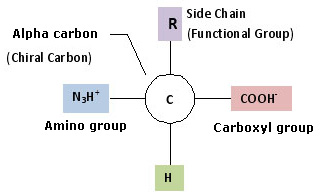
Only 20 amino acids are found in human peptides and proteins. These naturally occurring amino acids are used by cells to synthesize peptides and proteins. They are typically identified by the generic formula: Hβ‚‚NCHRCOOH. The primary difference between the 20 amino acids is the structure of the R group.

Non-polar, aliphatic residues
Glycine

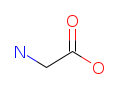
Glycine (G/Gly). The simplest and only achiral amino acid. One of the three most important glycogenic amino acids and a key component of collagen. Acts as an inhibitory neurotransmitter and participates in the biosynthesis of purines, creatine, and bile salts. Read more about Glycine.

Alanine

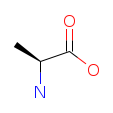
Alanine (A/Ala). Important source of energy for muscle. One of the three most important glycogenic amino acids. The primary amino acid in sugar metabolism. Boosts immune system by producing antibodies. Read more about Alanine.

Valine

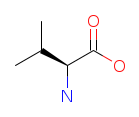
Valine (V/Val). Essential for muscle development. A branched-chain amino acid (BCAA) that supports muscle metabolism, tissue repair, and nitrogen balance. Read more about Valine.

Leucine

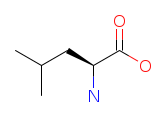
Leucine (L/Leu). Beneficial for skin, bone, and tissue wound healing. The most potent branched-chain amino acid for stimulating muscle protein synthesis. Read more about Leucine.

Isoleucine

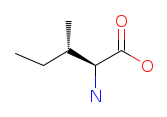
Isoleucine (I/Ile). Necessary for the synthesis of hemoglobin. Regulates blood sugar and energy levels and supports immune function. Read more about Isoleucine.

Proline

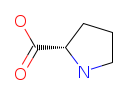
Proline (P/Pro). Critical component of cartilage, aids in joint health, tendons, and ligaments. Keeps the heart muscle strong. Read more about Proline.

Aromatic residues
Phenylalanine

Phenylalanine (F/Phe). Beneficial for healthy nervous system function. Boosts memory and learning. A precursor to tyrosine, dopamine, norepinephrine, and adrenaline. Read more about Phenylalanine.

Tyrosine

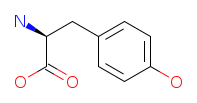
Tyrosine (Y/Tyr). Precursor of dopamine, norepinephrine, and adrenaline. Increases energy, improves mental clarity and concentration, and can treat some forms of depression. Read more about Tyrosine.

Tryptophan

Tryptophan (W/Trp). Necessary for the synthesis of neurotransmitter serotonin. Effective sleep aid due to conversion to serotonin. Reduces anxiety and some forms of depression. Treats migraines and headaches. Stimulates growth hormone. Read more about Tryptophan.

Polar, non-charged residues
Serine

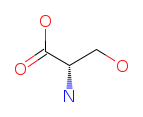
Serine (S/Ser). One of the three most important glycogenic amino acids, the others being alanine and glycine. Maintains blood sugar levels and boosts the immune system. Myelin sheaths contain serine. Read more about Serine.

Threonine

Threonine (T/Thr). Required for the formation of collagen. Helps prevent fatty deposits in the liver. Aids in antibody production. Read more about Threonine.

Cysteine

Cysteine (C/Cys). Protective against radiation, pollution, and ultra-violet light. A powerful detoxifier, necessary for growth and repair of skin. Forms disulfide bonds that give proteins their three-dimensional shape. Read more about Cysteine.

Methionine

Methionine (M/Met). An antioxidant. Helps in the breakdown of fats and aids in reducing muscle degeneration. The universal start codon β€” every protein synthesis begins with methionine. Read more about Methionine.

Asparagine

Asparagine (N/Asn). The first amino acid ever isolated, from asparagus juice in 1806. Plays a key role in protein glycosylation and serves as a nitrogen transport molecule throughout the body. Read more about Asparagine.

Glutamine

Glutamine (Q/Gln). Essential for helping to maintain normal and steady blood sugar levels. Helps muscle strength and endurance. Supports gastrointestinal function and provides energy to the small intestines. Read more about Glutamine.

Positively charged residues
Lysine

Lysine (K/Lys). Component of muscle protein, needed in the synthesis of enzymes and hormones. Also a precursor for L-carnitine, which is essential for healthy nervous system function. Read more about Lysine.

Arginine

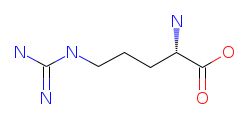
Arginine (R/Arg). May increase endurance and decrease fatigue. Detoxifies harmful chemicals via the urea cycle. A precursor to nitric oxide, which regulates blood vessel dilation. Involved in DNA synthesis. Read more about Arginine.

Histidine

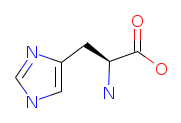
Histidine (H/His). Found in high concentrations in hemoglobin. Has been used to treat anemia and rheumatoid arthritis. A precursor to histamine, essential for immune response. Read more about Histidine.

Negatively charged residues
Aspartic acid

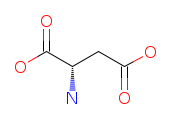
Aspartate (D/Asp). Increases stamina and helps protect the liver. Involved in DNA and RNA metabolism and immune system function. Acts as an excitatory neurotransmitter in the central nervous system. Read more about Aspartate.

Glutamic acid

Glutamate (E/Glu). The most abundant excitatory neurotransmitter in the nervous system. Responsible for the savory umami taste and involved in nitrogen metabolism. Read more about Glutamate.

Properties of Amino Acids (pKa, pKb, pKx, pI)

Amino acid structure

The properties of Ξ±-amino acids are complex, yet simplistic in that every molecule involves two functional groups: carboxyl (–COOH) and amino (–NHβ‚‚). Each molecule can contain a side chain or R group β€” Alanine, for example, is a standard amino acid containing a methyl side chain group. The R groups have a variety of shapes, sizes, charges, and reactivities. This allows amino acids to be grouped according to the chemical properties of their side chains.

Name3-letter1-letterMW (g/mol)Molecular FormulaResidue FormulaResidue MWpKapKbpKxpI
AlanineAlaA89.10C3H7NO2C3H5NO71.082.349.69–6.00
ArginineArgR174.20C6H14N4O2C6H12N4O156.192.179.0412.4810.76
AsparagineAsnN132.12C4H8N2O3C4H6N2O2114.112.028.80–5.41
Aspartic acidAspD133.11C4H7NO4C4H5NO3115.091.889.603.652.77
CysteineCysC121.16C3H7NO2SC3H5NOS103.151.9610.288.185.07
Glutamic acidGluE147.13C5H9NO4C5H7NO3129.122.199.674.253.22
GlutamineGlnQ146.15C5H10N2O3C5H8N2O2128.132.179.13–5.65
GlycineGlyG75.07C2H5NO2C2H3NO57.052.349.60–5.97
HistidineHisH155.16C6H9N3O2C6H7N3O137.141.829.176.007.59
HydroxyprolineHypO131.13C5H9NO3C5H7NO2113.111.829.65––
IsoleucineIleI131.18C6H13NO2C6H11NO113.162.369.60–6.02
LeucineLeuL131.18C6H13NO2C6H11NO113.162.369.60–5.98
LysineLysK146.19C6H14N2O2C6H12N2O128.182.188.9510.539.74
MethionineMetM149.21C5H11NO2SC5H9NOS131.202.289.21–5.74
PhenylalaninePheF165.19C9H11NO2C9H9NO147.181.839.13–5.48
ProlineProP115.13C5H9NO2C5H7NO97.121.9910.60–6.30
PyroglutamicGlpU139.11C5H7NO3C5H5NO2121.09–––5.68
SerineSerS105.09C3H7NO3C3H5NO287.082.219.15–5.68
ThreonineThrT119.12C4H9NO3C4H7NO2101.112.099.10–5.60
TryptophanTrpW204.23C11H12N2O2C11H10N2O186.222.839.39–5.89
TyrosineTyrY181.19C9H11NO3C9H9NO2163.182.209.1110.075.66
ValineValV117.15C5H11NO2C5H9NO99.132.329.62–5.96

Amino acids are crystalline solids which are usually water soluble and only sparingly soluble in organic solvents. Their solubility depends on the size and nature of the side chain. Amino acids have very high melting points, up to 200–300Β°C. Their other properties vary for each particular amino acid.

Isoelectric Points of Amino Acids

The isoelectric point (pI) of an amino acid refers to the pH at which the amino acid exists in its neutral, or zwitterionic, form. At the isoelectric point, the amino acid carries no net electrical charge because the positive charge on the amino group (+NH₃) equals the negative charge on the carboxyl group (βˆ’COOβˆ’). The isoelectric point is an essential concept in biochemistry and plays a role in various biological processes, including protein behavior and separation techniques.

pI calculation. The pI is the pH at which an amino acid is electrically neutral. For amino acids with ionizable side chains, determining the pI involves considering the ionization of the amino and carboxyl groups, as well as the side chain (R-group). For example, the pI of glycine is around 5.97, while the pI of lysine, with a basic side chain, is approximately 9.74.

The isoelectric point is crucial in the study of proteins and their behavior in different environments. Techniques like isoelectric focusing use the principles of the isoelectric point to separate proteins based on their pI values in an electric field.

Zwitterionic Form of Amino Acids

Since the amino and the acidic groups have opposite electrical charges, an amino acid (an amphoteric electrolyte) acts as both a base and an acid by accepting and supplying a hydrogen ion, respectively. Thus, all amino acids form intramolecular salts both in the crystalline state and in aqueous solution. This structure, in which a molecule has both positive and negative electrical charges, is known as a dipolar ion or zwitterion. Uncharged (nondissociated) forms of amino acids almost do not exist.

Zwitterion of amino acids

For example, the ratio of charged dipolar (ionized Ξ±-amino and Ξ±-carboxyl groups) to uncharged forms of L-aspartic acid in aqueous solution is approximately 28,000:1 at pH 7.0. Similarly, the proportion of charged dipolar to uncharged forms of L-lysine in aqueous solution is approximately 320,000:1 at pH 7.0.

Amino Acids and Neurotransmitters

Individual types of amino acids have particular characteristics. Some are capable of influencing body processes because they are essential to the formation of neurotransmitters β€” substances used in the brain and by the nervous system to increase or decrease the efficiency and rapidity of nerve transmission. The ability of the brain to receive and transmit messages depends upon these neurotransmitters, which are themselves dependent upon particular amino acids. All functions of the body depend upon sound nervous interconnection. The coordination and regulation of all the millions of messages that are constantly going on in the body depend upon neurotransmitters and therefore on amino acids. Some of the neurotransmitters have a stimulating, excitatory function; others have a calming, inhibitory function.

The scope and use of appropriate amino acids in therapy can therefore be seen to be enormous. Unless all the amino acids, in their free form, are present in adequate amounts, there will be imbalances in neurotransmitter function, and a variety of nervous and emotional problems will result. The very energy of the brain is dependent upon certain amino acids. Tryptophan and phenylalanine are both of profound importance in their relation to brain and nerve function.

Another major area of activity of some amino acids is as detoxifiers of the body. The sulphur-rich amino acids β€” methionine, cysteine, and cystine β€” are especially capable of this sometimes life-saving task. They have the ability to chelate (lock onto) heavy metals such as lead, mercury, and aluminium, which are toxic to the body, and to actually remove them from the system.

They are also capable of damping down damaging oxidative processes in the body. When toxic substances are present in tissue or in the bloodstream, there is potential for free radical damage, as fractions of the oxidizing substance cascade around the area creating tissue damage. These processes β€” thought to result in cell changes as occur in arteries before they become atherosclerotic, and in cells before they become cancerous β€” are controlled by free radical scavengers, of which the sulphur-rich amino acids are a major part. Vitamins A, C, and E and the mineral selenium are also anti-oxidants which reduce free radical damage.

Glucogenic and Ketogenic Amino Acids

Glucogenic Amino Acid

A glucogenic amino acid, also known as a glucoplastic amino acid, is an amino acid capable of undergoing conversion into glucose through the process of gluconeogenesis. This stands in contrast to ketogenic amino acids, which are transformed into ketone bodies.

The conversion of glucogenic amino acids into glucose follows a two-step process. Initially, these amino acids are transformed into alpha-keto acids. Subsequently, these alpha-keto acids undergo further conversion into glucose. Both of these crucial processes take place primarily in the liver. This mechanism becomes particularly prominent during catabolism, becoming more pronounced as the severity of fasting and starvation increases.

In humans, the glucogenic amino acids are: Alanine; Arginine; Asparagine; Aspartic acid; Cysteine; Glutamic acid; Glutamine; Glycine; Histidine; Methionine; Proline; Serine; Valine.

Ketogenic Amino Acid

A ketogenic amino acid is an amino acid capable of being directly degraded into acetyl-CoA. Acetyl-CoA serves as the precursor for ketone bodies and myelin, particularly crucial during early childhood when there is a heightened demand for myelin synthesis in the developing brain. Unlike glucogenic amino acids, ketogenic amino acids cannot be converted into glucose, as both carbon atoms in the resulting ketone bodies are ultimately metabolized into carbon dioxide through the citric acid cycle.

In humans, two amino acids β€” leucine and lysine β€” are exclusively ketogenic. Additionally, there are amino acids with dual characteristics, being both glucogenic and ketogenic, referred to as amphibolic. A helpful mnemonic for remembering these is "PITTT": phenylalanine, isoleucine, threonine, tryptophan, and tyrosine.

Amino Acid Catabolism

Amino acid catabolism, also known as amino acid degradation, is a fundamental process that involves the breakdown of amino acids into simpler molecules. This intricate biochemical pathway is essential for maintaining nitrogen balance, generating energy, and providing intermediates for various metabolic processes.

Amino acid catabolism pathways diagram

Amino acid catabolism diagram by Mikael HΓ€ggstrΓΆm (Wikimedia Commons)

What Foods Contain Amino Acids?

Essential amino acids can be obtained by maintaining a protein-rich diet, available in various plant and animal foods.

Complete proteins, containing all 20 or more types of amino acids, are present in certain foods. Examples include red meat, chicken, fish, seafood, eggs, milk, cheese, yogurt, quinoa, chia seeds, and tofu. These foods are comprehensive sources of essential amino acids.

Conversely, some foods are incomplete proteins, lacking one or more of the nine essential amino acids. Plant-based sources like grains, nuts, seeds, beans, legumes, fruits, and vegetables fall into this category. If you follow a vegetarian or vegan diet, incorporating a variety of these incomplete proteins is essential to ensure the intake of all necessary amino acids.

Amino Acid Supplements: Supporting Health and Wellness

Amino acid supplements have gained popularity for their diverse benefits across different age groups and health goals. From promoting muscle growth to aiding in weight loss and enhancing hair health, these supplements play a crucial role in overall well-being.

For Women and Kids. Amino acid supplements tailored for women and kids cater to specific nutritional needs, supporting growth, development, and overall health maintenance. They are formulated to provide essential nutrients necessary for energy production and immune function.

For Weight Loss. Amino acid supplements are increasingly recognized for their potential to aid in weight loss efforts. By supporting metabolism and suppressing appetite, they can assist in achieving and maintaining a healthy weight, making them a valuable addition to weight loss regimens.

For Bodybuilding and Muscle Growth. Athletes and fitness enthusiasts often rely on amino acid supplements to support muscle recovery and growth. Branched-chain amino acids (BCAAs) and essential amino acids (EAAs) are particularly beneficial for enhancing protein synthesis and reducing muscle fatigue.

Amino Acids and Health

In considering amino acids in relation to health and ill health there are two main areas to cover. The first looks at particular conditions relating to disorders of amino acid metabolism, resulting in a related pathological state. The second area, and the one which attracts the major interest among nutritionally oriented practitioners, is that involving conditions not specifically related to diseases of amino acid metabolism, and yet which appear to respond positively to dietary manipulation involving the intake of particular amino acids and other nutrients.

Such conditions as certain forms of depression, insomnia, herpes infections, weight problems, fat metabolism dysfunction, and epilepsy have all been shown to improve, in suitable cases, by the use of appropriate amino acid therapy. Certain physiological functions have also been enhanced by the selective use of amino acids. These include detoxification of heavy metals, modification of free radical activity, and enhanced mental function via neurotransmitter stimulation.

The ability of the brain neurons to manufacture and utilize a number of neurotransmitters β€” such as serotonin, acetylcholine, and the catecholamines dopamine and norepinephrine β€” is dependent upon the concentrations of both amino acids and choline in the bloodstream. This largely depends upon the food composition at the previous meal. Since the brain is apparently unable to make adequate quantities of amino acids and choline to meet its requirements for neurotransmitter synthesis, it is vital that adequate quantities of these precursors are present in the circulation. The dry material of the brain comprises more than one third protein, and stress can create a situation in which non-essential amino acids cannot be adequately produced to meet its needs β€” a situation that can result in a range of mental and emotional symptoms such as depression, apathy, and irritability.

Science shouldn't be boring

We've organized everything you want to know about amino acids β€” without the textbook numbness.

01⬑

The Periodic Chart

An interactive chart of all 20 amino acids, color-coded by chemistry. Click any cell to explore.

02πŸ“–

Discovery Stories

The fascinating, sometimes accidental, always human stories behind each amino acid's discovery.

03🌿

In Nature & Food

Where do amino acids come from? Seeds, cheeses, meteorites β€” the answers might surprise you.

04🧩

The Quiz

Test what you know with our amino acid quiz. No trick questions β€” just satisfying chemistry.

Ready to meet all 20?

The interactive periodic chart is the best place to start. Each cell links to a full page with chemistry, history, and fascinating facts.

⬑ Open the Chart