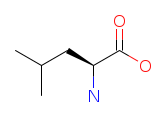
The most abundant amino acid in muscle protein — and the one single amino acid that acts as a molecular switch to turn on muscle protein synthesis.
Symbol
Leu · L
Discovered
1820
Mol. Weight
131.18 g/mol
Essential
Yes
L
Discovery: Cheese and Muscle in the Same Year
L-Leucine
Leucine was first isolated in 1819 from cheese by French chemist Joseph Louis Proust during fermentation experiments on cheese flavour. He named it oxide caséeux, from the Latin caseus (cheese). The following year, 1820, another French chemist, Henri Braconnot, independently isolated the same compound in pure crystalline form from skeletal muscle and wool, using acid hydrolysis. Unaware of Proust's earlier work, Braconnot gave it the name leucine, from the Greek leukos (white), for the white crystalline appearance of the crystals. The structure of leucine was not fully established until the end of the 19th century through laboratory synthesis.
Braconnot didn't know what amino acids were — the concept wouldn't exist for decades. He simply knew he had isolated a new nitrogen-containing substance from protein. What he had found, without knowing it, was the most abundant amino acid in mammalian muscle — a molecule that would later turn out to sit at the center of how the body regulates muscle growth and maintenance.
💪 The mTOR Switch: How Leucine Talks to Muscle
Every time you eat protein, muscle cells need to decide whether to build new protein or not. The primary signal they use is leucine concentration. When leucine rises in the bloodstream after a meal, it activates a protein kinase called mTOR (mechanistic Target Of Rapamycin) — the master regulator of cell growth and protein synthesis.
mTOR activation sets off a cascade of phosphorylation events that switch on the ribosomal machinery for protein synthesis. The remarkable thing is that leucine, not total protein intake, is the primary trigger. A meal with the same protein content but lower leucine produces a weaker anabolic signal. This is why protein quality — measured partly by leucine content — matters, not just quantity. Among all amino acids, leucine has the strongest mTOR-activating effect by a wide margin.
Identifiers and Properties of Leucine
Identity
IUPAC Name(2S)-2-Amino-4-methylpentanoic acid
FormulaC₆H₁₃NO₂
Mol. Weight131.18 g/mol
CAS Number61-90-5
MDL NumberMFCD00002617
Physical
Melting point293 °C
Solubility22.4 g/L (20 °C)
pKa₁ (COOH)2.36
pKa₂ (NH₃⁺)9.60
pI5.98
Rf (BuOH/AcOH/H₂O = 12:3:5)0.73
Identifiers
Canonical SMILESCC(C)CC(C(=O)O)N
Isomeric SMILESCC(C)C[C@@H](C(=O)O)N
InChIKeyROHFNLRQFUQHCH-YFKPBYRVSA-N
CategoryNonpolar
EssentialYes
Most Abundant in Muscle Protein
Leucine makes up approximately 8% of all amino acid residues in mammalian muscle proteins — the highest of any single amino acid. It is especially concentrated in the myosin and actin filaments that make up the contractile machinery of muscle. When muscle protein is broken down during fasting or injury, leucine is released in large amounts and becomes available as both a fuel source and a signal molecule.
This creates an interesting feedback loop: as muscle protein is degraded, leucine rises and activates mTOR, which stimulates new protein synthesis. The muscle uses its own breakdown products as a signal to rebuild. How efficiently this rebuilding happens depends on whether there is an adequate supply of all essential amino acids from the diet — leucine can flip the switch, but all the other amino acids have to be present to build with.
Six Codons — Tied for the Most
Like arginine, leucine is encoded by six different codons: CUU, CUC, CUA, CUG, UUA, and UUG. This is the maximum degeneracy seen in the genetic code — and it reflects leucine's importance. The genetic code is not random; codons for more frequently used amino acids tend to be more numerous, providing resilience against mutations. A mutation that changes one base in a leucine codon is likely to produce another leucine codon — protecting the protein from amino acid substitution errors.
Functions of L-Leucine in the Body
As an essential amino acid, leucine must be obtained from diet and participates in several important physiological processes beyond its primary role in muscle protein synthesis.
Blood glucose regulation
Leucine is a purely ketogenic amino acid — its carbon skeleton is degraded to acetyl-CoA and acetoacetate rather than to glucose precursors. However, it contributes to blood glucose homeostasis indirectly by stimulating insulin secretion from pancreatic beta cells and by influencing the mTOR-mediated uptake and utilization of glucose in muscle. Adequate leucine availability helps maintain normal metabolic regulation of energy substrates.
Growth hormone stimulation
Leucine has been shown to stimulate the secretion of growth hormone (GH) from the pituitary gland. Growth hormone plays a key role in protein anabolism, body composition, and tissue repair. This effect is consistent with leucine's broader role as a nutrient signal that promotes anabolic processes in muscle and other tissues.
Protection against muscle protein breakdown
In addition to stimulating protein synthesis, leucine has been shown to inhibit muscle protein degradation — a process that accelerates during injury, surgery, prolonged illness, or severe physiological stress. By both activating synthesis and reducing breakdown, leucine helps preserve lean muscle mass under catabolic conditions. This is why leucine-enriched nutritional formulas are used in clinical settings for patients recovering from surgery or trauma.
Did You Know?
Leucine zippers — protein structures where leucine residues interlock like a zip fastener — are found in hundreds of gene-regulatory proteins. The motif was first described in 1988 and named by Steven McKnight.
Interesting Facts
🧀
From cheese to molecular biology. Proust first found leucine in cheese in 1819; Braconnot isolated it from muscle in 1820 and gave it its name. Today, leucine is used to study one of the most important signaling pathways in cell biology. The same molecule found in a piece of cheese is a key input to the mTOR pathway — a pathway so central to cancer biology, aging research, and metabolism that it has been called "the master regulator of cell growth."
🔡
The leucine zipper. A leucine zipper is a protein structural motif where leucine residues appear at every seventh position along an alpha-helix, causing them to line up on one face of the helix. Two such helices can interdigitate their leucine residues like a zipper, holding the helices together. Leucine zippers are found in many transcription factors — proteins that control gene expression — and are one of the most important protein-protein interaction motifs in molecular biology.
🍺
Role in bread and beer flavors. Leucine is a precursor to isoamyl alcohol, one of the key flavor compounds produced during fermentation. In brewing, the Ehrlich pathway — by which yeast convert amino acids including leucine into fusel alcohols — contributes significantly to beer character. Leucine-derived compounds give banana and fruity notes to certain yeast strains, particularly in wheat beers and Belgian ales.
🌿
Found in all protein-containing foods. Because leucine is so abundant in proteins generally, it is found in meaningful quantities in virtually every protein-containing food. Animal proteins tend to be higher in leucine than most plant proteins, which is one reason why complete proteins from animal sources have a stronger effect on muscle protein synthesis per gram consumed.
Where Leucine Is Found
As an essential amino acid, leucine must come from food. It is the most abundant BCAA in animal proteins. Values below are approximate per standard serving: